You Won’t Believe What I Found in Pula’s Hidden Art Spaces
Pula, Croatia isn’t just ancient ruins and sparkling coastlines—it’s a hub of creative energy hiding in plain sight. I went looking for souvenirs but ended up discovering galleries, studios, and pop-up markets where art meets everyday life. These aren’t your typical tourist traps; they’re real spaces shaped by local passion. If you think shopping here is just about trinkets, think again. This is where culture, craft, and authenticity come together in the most unexpected ways. What began as a casual stroll through narrow cobbled streets turned into a journey of quiet revelation—art was not confined to museums or postcards, but woven into the rhythm of daily life, in doorways, courtyards, and sunlit workshops where hands shaped meaning from clay, paint, and thread.
Beyond the Roman Arena: Pula’s Quiet Creative Pulse
Pula is best known for its remarkably preserved Roman Amphitheatre, a majestic stone colosseum that rises from the heart of the Old Town like a sentinel of history. Tourists flock here to walk in the footsteps of gladiators and marvel at one of the world’s most intact ancient arenas. Yet beyond this iconic landmark, another story unfolds—one less told but equally compelling. Tucked behind ivy-draped walls and within converted warehouses, a network of creative spaces pulses with contemporary life. This is not art for spectacle, but art as expression, rooted in community and shaped by the rhythms of Adriatic light, sea air, and centuries of layered heritage.
The city’s artistic heartbeat is most vivid in neighborhoods like Gortanovo and the northern edges of the Old Town, where narrow alleys open into courtyards humming with creativity. Here, former storage units and abandoned workshops have been reclaimed by artists seeking affordable space and natural light. These transformations are subtle—no grand signage or polished facades—just a painted door, a hand-lettered sign, or the faint scent of turpentine drifting into the street. It’s a scene that thrives on intimacy rather than visibility, where creation happens not behind glass but in full view, often with a coffee in hand and a neighbor stopping by to chat.
What makes Pula’s art scene distinctive is its organic integration into the urban fabric. Unlike cities where galleries cluster in designated districts, here creativity spills into residential zones, blending with bakeries, family-run grocery stores, and quiet parks. This lack of separation between art and life reflects a broader cultural attitude—one that values craftsmanship not as luxury, but as a natural extension of identity. The Istrian peninsula has long been a crossroads of Italian, Slavic, and Mediterranean influences, and this fusion lives on in the textures, colors, and forms emerging from local studios. It’s a creative pulse that doesn’t demand attention; it simply exists, waiting for those who walk slowly and look closely.
Where Art Lives: Exploring Local Galleries and Studios
For travelers seeking a deeper understanding of Pula’s cultural landscape, a visit to the Gallery of Contemporary Art—Moderna galerija—offers an essential starting point. Housed in a restored 19th-century building near the city center, the gallery presents a curated selection of Croatian artists, both established and emerging. Its rotating exhibitions often explore themes of memory, identity, and the natural environment, with works ranging from large-scale oil paintings to experimental multimedia installations. What sets this space apart is its accessibility; entry is modestly priced, and staff are eager to discuss the context behind each piece, often sharing personal insights about the artists’ lives and inspirations.
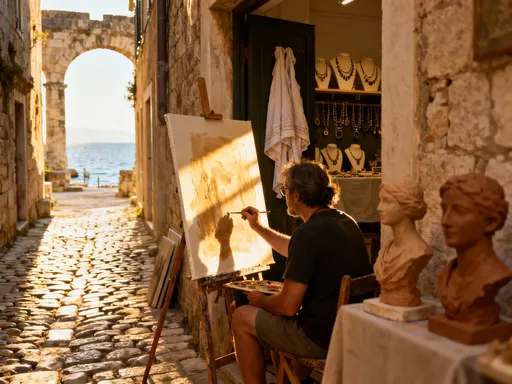
Yet the true magic lies beyond institutional walls, in the independent studios scattered throughout the city. In a quiet lane off Marshal Tito Street, a ceramicist works at a potter’s wheel, her hands moving with practiced grace as she shapes vessels inspired by ancient Roman forms. Nearby, in a sunlit atelier above a bookshop, a painter captures the shifting hues of the Adriatic on canvas, using layers of translucent glaze to mimic the way light dances across water. These encounters are not staged for tourists—they are real moments of creation, open to anyone who pauses to look.
Visitors are often welcomed with warmth and curiosity. Many artists speak English and appreciate genuine interest in their process. Some offer short demonstrations or allow guests to try their hand at simple techniques, whether it’s pressing a design into wet clay or mixing pigments from natural minerals. These interactions create a rare kind of connection—one that transcends language and transforms a casual visit into a shared experience. The art itself frequently draws from local motifs: olive branches, seashells, historic architecture, and the soft, golden light unique to this part of the coast. It’s not art about Pula; it’s art made *by* Pula, shaped by its air, history, and soul.
The Artist’s Market: Shopping with Soul in Pula
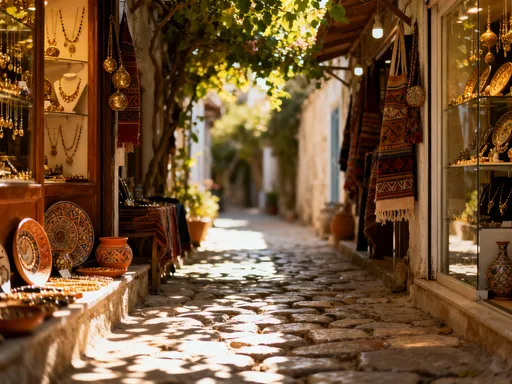
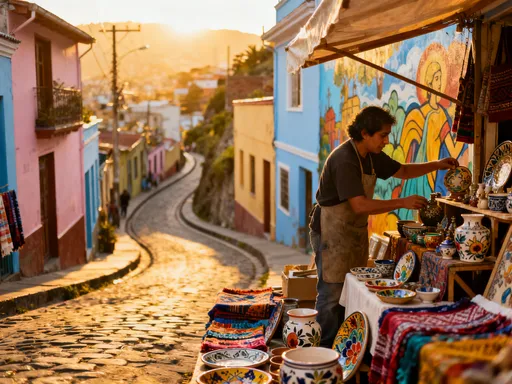
One of the most rewarding ways to engage with Pula’s creative community is through its weekly artisan markets, particularly the Friday farmers’ and crafts market held near the harbor. Unlike souvenir stalls selling mass-produced magnets and keychains, this vibrant gathering showcases the work of local makers—jewelers, weavers, potters, and woodcarvers who sell directly to the public. The atmosphere is lively yet unhurried, with baskets of ripe figs beside tables of hand-hammered silver earrings, and bolts of handwoven linen draped beside jars of wild thyme honey.
What makes this market special is its authenticity. Each item carries the imprint of its maker—the slight variation in a ceramic glaze, the irregular stitch in a linen napkin, the unique grain of olive wood carved into a spoon. These are not factory-made replicas, but one-of-a-kind creations born from skill and care. Shoppers can speak directly with artisans, learning how a necklace was inspired by Roman mosaics or how a set of coasters was painted using traditional Istrian patterns passed down through generations.
The sensory experience is rich and grounding. The air carries the earthy scent of olive wood shavings, the faint metallic tang of silver being polished, and the sweet aroma of lavender bundles tied with twine. Textures invite touch—rough-hewn pottery, smooth river stones set into pendants, and the cool weight of blown glass vases. Even the sounds contribute to the ambiance: the soft clink of glassware, the murmur of conversation in Croatian and Italian, and the occasional strum of a guitar from a street musician nearby. To shop here is not merely to acquire an object, but to participate in a living tradition of making and sharing.
From Studio to Suitcase: What to Buy (and Why It Matters)
When traveling, the souvenirs we bring home often become more than decorative objects—they become vessels of memory, each carrying a story of place, person, and moment. In Pula, choosing art-inspired items over generic trinkets transforms this act into something meaningful. Hand-painted Istrian tiles, for example, are not only beautiful but deeply rooted in regional history. Traditionally used to decorate homes and churches, these ceramic squares feature geometric patterns and floral motifs in deep blues, terracottas, and creams. Today, artists reinterpret these designs into coasters, trivets, and wall art, making them both functional and symbolic.
Blown glass is another standout. Local workshops, often family-run, produce delicate vases, bowls, and ornaments using techniques passed down through decades. The process itself is mesmerizing—glassmakers gathering molten material on long pipes, shaping it with precision tools, and cooling it slowly to prevent cracks. Each piece bears the subtle imperfections that mark it as handmade, from slight asymmetry to gentle ripples in the surface. Owning such an item means preserving a craft that resists industrialization and values patience over speed.
Notebooks and journals adorned with regional motifs offer a quieter kind of treasure. Bound in leather or recycled paper, many are illustrated with scenes of Pula’s coastline, Roman columns, or native flora. They serve not only as keepsakes but as invitations to continue creating—writing, sketching, reflecting. By choosing these items, travelers support sustainable practices: reducing waste from imported goods, minimizing carbon footprint, and contributing directly to local livelihoods. More than that, they help sustain traditions that might otherwise fade in the face of globalized commerce. Every purchase becomes a small act of cultural preservation.
How to Find These Spaces: A Local’s Approach
Finding Pula’s hidden art spaces requires a shift in mindset—from checklist tourism to curious wandering. While guidebooks may highlight the amphitheatre and city gates, the creative gems are rarely listed in bold print. The best way to discover them is on foot, taking side streets that branch off the main promenade. A simple walk from the harbor toward the northern edge of the Old Town can yield unexpected finds: a studio with an open door, a mural tucked behind a staircase, or a pop-up exhibition in a repurposed tram station.
Technology can assist, but with discretion. Google Maps, for instance, allows users to search “art studios” or “galleries in Pula,” and many small spaces are tagged by previous visitors. However, the most reliable recommendations often come from conversations. Baristas, bookstore owners, and shopkeepers who live in the city are usually happy to point travelers toward lesser-known spots. A simple question—“Do you know any local artists or small galleries nearby?”—can lead to a hand-drawn map or a personal introduction.
Timing also plays a role. Summer evenings are ideal, when many galleries and studios host “open atelier” events, often accompanied by live music, wine, and informal talks. The annual Pula Art Weekend, typically held in late June, transforms the city into a walking exhibition, with installations in courtyards, parks, and even abandoned buildings. During this time, guided tours led by local curators offer behind-the-scenes access to spaces normally closed to the public. Even outside festivals, a respectful knock on a studio door—especially when lights are on and music is playing—may be met with a warm invitation inside. The key is to move slowly, stay present, and embrace the possibility of surprise.
Why This Kind of Shopping Changes Your Trip
Shopping in Pula’s art spaces is not about acquiring objects—it’s about collecting experiences. When you buy a painting from a backstreet studio or a hand-carved spoon from a woodworker at the market, you’re not just purchasing an item; you’re bringing home a story. That small seascape in a simple frame? It was painted by a woman who grew up watching sunsets over the Brijuni Islands. The linen tea towel with embroidered olive branches? Woven by a retired teacher who learned the craft from her grandmother. These narratives transform souvenirs from decorative clutter into meaningful anchors of memory.
Back home, such pieces often become conversation starters. A guest might notice the Istrian tile on the kitchen wall and ask about its origin, leading to a recounting of cobblestone streets, the smell of salt air, and the sound of a potter’s wheel in motion. In this way, the journey continues long after the return flight. More importantly, this form of engagement shifts the nature of travel itself—from passive observation to active participation. Instead of merely seeing a culture, you begin to feel connected to it.
This aligns with a growing global trend toward experiential and mindful tourism. Travelers, especially those in their 30s to 50s, are increasingly seeking depth over convenience, authenticity over spectacle. They value moments of connection, whether with a local artist, a handmade object, or a quiet courtyard bathed in golden light. By choosing to explore Pula’s creative spaces, they contribute to a more sustainable model of tourism—one that honors the community rather than overwhelming it. The emotional reward is profound: a sense of having truly touched a place, not just passed through it.
Pula’s Art Scene: A Glimpse into the Future
The continued growth of Pula’s art ecosystem offers hope for a more balanced relationship between tourism and local life. In recent years, city initiatives and cultural grants have supported young artists in revitalizing neglected buildings, turning them into studios, exhibition spaces, and community workshops. These efforts not only preserve architectural heritage but also ensure that creativity remains accessible, not priced out by commercial development. Some projects even integrate environmental themes, using recycled materials or promoting eco-conscious design, reflecting a broader awareness of sustainability in the Adriatic region.
What makes this evolution promising is its grassroots nature. Unlike top-down cultural projects designed solely for tourist appeal, Pula’s art scene has grown from within—from artists who live here, care about their city, and want to share it on their own terms. This authenticity resonates with visitors seeking more than surface-level experiences. As long as tourism supports rather than overshadows these efforts, the city can thrive as both a historical destination and a living cultural hub.
To future travelers, the invitation is clear: come with curiosity. Walk beyond the amphitheatre. Step into a sunlit studio. Ask questions. Listen. Shop not for what’s easy, but for what’s meaningful. Let art be your guide, not just your souvenir. In doing so, you don’t just take something from Pula—you become part of its story, helping to sustain a tradition of creativity that has flourished quietly, beautifully, for generations.