What If Slow Travel Could Change How You See the World?
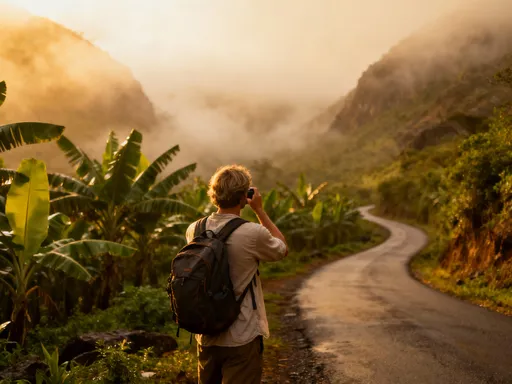
You know that feeling when you rush through a destination and come back emptier than when you left? I did—until I tried slow travel in Monteverde, Costa Rica. Instead of ticking boxes, I stayed for weeks, sipping coffee with locals, walking the same misty trails at dawn, and learning the rhythm of cloud forest life. It wasn’t just a trip—it reshaped how I connect with places. This is what real cultural immersion feels like. In a world that glorifies speed and efficiency, slow travel offers a quiet rebellion: the choice to linger, to observe, and to belong, even if only temporarily. Monteverde, perched high in Costa Rica’s mountainous northwest, became my classroom in mindfulness, ecology, and human connection. Here, time doesn’t march—it breathes. And in that breath, I discovered a deeper way of seeing not only a place, but myself.
Why Monteverde? The Allure of a Place That Moves at Its Own Pace
Monteverde stands apart not because it is grand or flashy, but because it resists the pull of modern tourism’s fast currents. Nestled in the Tilarán mountain range at nearly 5,000 feet above sea level, this mist-shrouded region is home to one of the most biodiverse ecosystems on the planet. Its isolation, once a barrier, now serves as a filter—discouraging mass tourism and inviting those who come not to conquer a checklist, but to settle into the quiet pulse of mountain life. The journey itself sets the tone: winding dirt roads, unpaved stretches, and the absence of large hotels signal that this is not a place built for haste. Instead, Monteverde rewards patience, offering travelers the rare gift of undisturbed natural beauty and a community deeply committed to sustainability.
The story of Monteverde begins in the 1950s, when a small group of Quaker families from Alabama sought refuge in Costa Rica to avoid the draft during the Korean War. Drawn by the country’s peaceful reputation and lush landscapes, they settled in this remote region and established a dairy cooperative that remains operational today. Their values—simplicity, environmental stewardship, and community cooperation—became foundational to Monteverde’s identity. Over time, these principles attracted conservationists, biologists, and like-minded travelers, creating a culture where ecological awareness is not a trend, but a way of life. This historical grounding gives the town a unique authenticity, one that feels earned rather than performed.
Unlike many tourist destinations that adapt to visitor demands, Monteverde has maintained its rhythm. There are no sprawling resorts, no neon-lit strip malls, and no cruise ship excursions. What exists instead are family-run lodges, organic farms, and locally owned cafés where conversation flows as easily as the coffee. The absence of commercial excess creates space for genuine connection—between people, between species, and between visitor and place. It is this integrity that makes Monteverde not just a location, but a philosophy in motion. For those seeking to slow down, it offers not just scenery, but sanctuary.
Slowing Down: How Time Transforms Travel
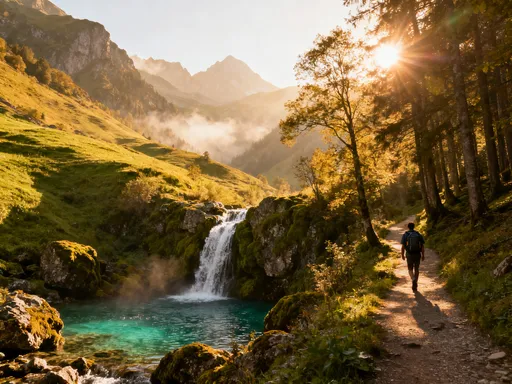
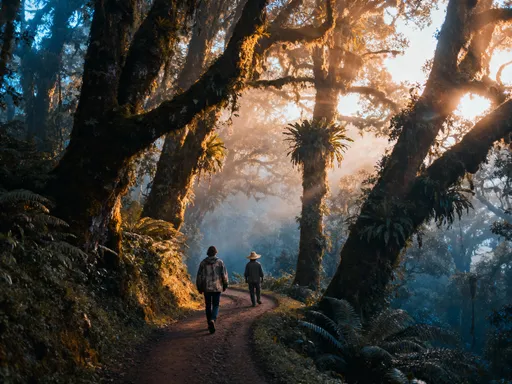
Most tourism operates on a rhythm of accumulation: how many sites can you see, how many photos can you take, how many stamps can you collect in a passport? Slow travel challenges this model by replacing quantity with depth. In Monteverde, I learned that presence matters more than productivity. My days no longer followed a rigid itinerary. Instead, they unfolded organically—guided by weather, curiosity, and the subtle invitations of the landscape. I returned to the same forest trail each morning, not out of lack of options, but in pursuit of familiarity. With each visit, I noticed something new: a change in light, a different bird call, the way the moss absorbed dew at dawn. Repetition, I realized, was not monotony—it was intimacy.
One morning, I sat on a wooden bench near the entrance of the cloud forest reserve and watched hummingbirds dart between heliconia flowers. I stayed for over an hour, doing nothing but observing. At first, my mind resisted—was I wasting time? But gradually, a shift occurred. My thoughts quieted. My senses sharpened. I began to notice the layered sounds of the forest: the distant call of a trogon, the rustle of leaves as a coati foraged, the soft drip of mist condensing on broad leaves. This kind of attention is rare in daily life, where distractions pull us in every direction. In Monteverde, time expands, allowing space for wonder to settle in.
Slow travel is not about doing less—it is about doing differently. It is the decision to linger over a conversation with a local farmer, to learn the name of a bird from a guide who has studied it for decades, or to sit with silence until it no longer feels awkward. These moments do not yield Instagrammable content, but they yield something more valuable: understanding. When we allow ourselves to move at the pace of a place, we stop being spectators and begin to participate. We become attuned to rhythms that exist independently of us—the daily migration of butterflies, the seasonal blooming of orchids, the quiet labor of those who care for the land. In that attunement, travel becomes not an escape, but an education.
Living Like a Local: Days Without Itineraries
In Monteverde, a typical day has no schedule. Mornings often begin with the aroma of freshly roasted coffee drifting from a nearby kitchen. I would walk to a small, family-run soda—a traditional Costa Rican eatery—where the owner greeted me by name after just a few visits. Breakfast was simple: gallo pinto (a mix of rice and beans), fried plantains, a fried egg, and strong, locally grown coffee. There was no menu to debate, no rush to clear the table. People ate slowly, talked with neighbors, and let the morning unfold without urgency. This unhurried start set the tone for the rest of the day, reminding me that nourishment is not just physical, but social and emotional.
After breakfast, I might wander down a dirt path toward the edge of the reserve, where a local farmer allowed visitors to help collect eggs from free-range chickens. There was no charge, no formal tour—just an open invitation rooted in trust and hospitality. As I crouched in the straw, searching for warm brown eggs, the farmer shared stories about raising chickens in the highlands, the challenges of predators, and the joy of feeding his family with what the land provides. These conversations were not performances for tourists; they were glimpses into real lives. Later, I might stop at a roadside fruit stand, where a woman sold pineapples, mangos, and passion fruit grown in her backyard. She offered me a slice of ripe mango, sweet and fragrant, and we stood together, eating in the shade of a guava tree.
These moments were unremarkable in the traditional sense of travel highlights, yet they carried a quiet significance. They were not curated experiences sold online, but spontaneous exchanges rooted in place and presence. By releasing the need to “see everything,” I opened myself to the beauty of the ordinary. I learned that cultural immersion does not require grand gestures—it happens in the way people greet each other, in the food they grow, in the stories they choose to share. When travel slows down, the line between visitor and local blurs, not because roles disappear, but because mutual respect grows. In that space, connection becomes possible.
The Cultural Heartbeat: Connecting with Monteverde’s Communities
Monteverde’s cultural fabric is woven from multiple threads: the descendants of Quaker settlers, Costa Rican ticos, indigenous influences, and an international community of scientists and conservationists. What unites them is a shared commitment to stewardship and community. One evening, I was invited to attend a local meeting at the community center, where residents discussed plans for a new recycling initiative. No one questioned my presence; instead, they welcomed me with nods and smiles. The conversation was in Spanish, but the intent was clear: this was a space where decisions were made collectively, where every voice mattered. I did not speak, but I listened—and in that listening, I felt included.
Another day, I joined a small festival celebrating the region’s dairy heritage. The event was modest: a cheese-tasting booth, children playing traditional games, and a few musicians strumming folk songs on guitar. An elderly woman, part of the original Quaker settlement, demonstrated how to make queso fresco using milk from her own cows. As she stirred the curds in a wooden vat, she explained the process in slow, careful Spanish, pausing to let me try my hand at pressing the cheese. Her hands, weathered but steady, moved with the confidence of decades of practice. This was knowledge passed down not in classrooms, but in kitchens and barns. To learn from her was not just to acquire a skill, but to honor a legacy.
These interactions revealed a truth often missed by conventional tourism: culture is not a performance. It is lived. It is in the way people care for their land, in the recipes they preserve, in the decisions they make together. In Monteverde, community is not a buzzword—it is a daily practice. Whether attending a church service, helping plant trees with a local school group, or sharing a meal with a host family, I experienced a sense of belonging that transcended my status as a visitor. These moments did not erase the fact that I was temporary, but they reminded me that connection is possible across boundaries of language, nationality, and time.
Nature as Culture: How the Cloud Forest Shapes Daily Life
In Monteverde, nature is not a backdrop—it is a participant in daily life. The cloud forest, with its perpetual mist, rich biodiversity, and delicate balance, influences everything from architecture to diet to conversation. Houses are built with sloped roofs to handle constant moisture, windows are designed to capture natural light without disturbing wildlife, and gardens are planted with native species to support pollinators. Even the way people speak reflects their environment: phrases like “the forest is singing today” or “the fog is heavy” are common, revealing a deep attunement to natural rhythms.
Food in Monteverde is shaped by the land. Meals feature ingredients grown locally: heart of palm, tree tomatoes, highland strawberries, and, of course, coffee. Dairy products, a legacy of the Quaker settlers, are still produced on small farms using sustainable methods. I visited one such farm where a third-generation cheesemaker explained how the flavor of his cheese changes with the seasons, depending on what the cows graze on. “The forest feeds them,” he said, “so the forest is in every bite.” This understanding—that food is not separate from ecosystem—is central to the region’s identity.
Environmental awareness is not taught as a separate subject in schools; it is lived. Children learn to identify bird calls before they learn multiplication tables. Families take weekend walks not for exercise, but to observe changes in the forest. Guided nature walks, led by local naturalists, are not just tourist activities—they are acts of cultural transmission. These guides, many of whom grew up in Monteverde, speak of the forest with reverence, sharing stories of rare orchids, endangered frogs, and the importance of protecting watersheds. Their knowledge is not academic—it is ancestral, experiential, and deeply personal. In this way, conservation is not a policy, but a practice of love.
Practical Slow Travel: Choosing Stays, Transport, and Rhythms
Slow travel is not just a mindset—it requires intentional choices. Where you stay, how you move, and how you spend your time all shape the depth of your experience. In Monteverde, I chose a family-run eco-lodge nestled in the forest, where solar panels powered the lights and rainwater was collected for showers. The owners, a Costa Rican couple who had returned from careers in the city, spoke passionately about their decision to live simply and sustainably. Each morning, they prepared breakfast with ingredients from their garden and nearby farms. Staying there was not just accommodation—it was participation in a way of life.
Transportation also played a role in slowing down. Instead of renting a car, I relied on shared shuttles, local buses, and my own two feet. Walking became a primary mode of exploration, allowing me to notice details I would have missed at speed: a patch of wild ginger, the scent of damp earth, the sound of a hidden stream. When I needed to travel farther, I used the community shuttle service, where conversations with drivers and fellow passengers often led to unexpected invitations—dinner at a local home, a tour of a private reserve, a lesson in weaving. These interactions would have been impossible behind the wheel of a rental car.
Shopping habits shifted too. I frequented the weekly farmers’ market, where vendors sold organic produce, handmade crafts, and local honey. Buying directly from producers meant supporting small-scale agriculture and reducing environmental impact. I learned to shop with intention, purchasing only what I needed and appreciating the labor behind each item. Even simple acts, like carrying a reusable bag or refusing plastic straws, felt meaningful in a community so committed to preservation. These choices were not about perfection, but about alignment—with values, with place, with purpose.
The Ripple Effect: How Slow Travel Changes You Long After You Leave
The impact of slow travel does not end when the journey does. Long after I returned home, I found myself carrying Monteverde with me—in the way I brewed my coffee, in the way I walked through my neighborhood park, in the way I listened to people. The habit of presence, cultivated in the cloud forest, began to reshape my daily life. I became more patient, more attentive, more willing to sit with silence. I noticed how often I had rushed through moments that deserved stillness. Slow travel had not just changed how I saw the world—it had changed how I lived in it.
My relationship with consumption shifted too. I bought less, chose local products more often, and thought more deeply about the origins of what I used. I began composting, supporting farmers’ markets, and reducing single-use plastics—not out of guilt, but out of a renewed sense of connection to the natural world. These changes were not dramatic, but they were consistent, rooted in the values I had witnessed in Monteverde. I realized that sustainability is not a distant ideal—it is a series of small, daily choices.
Perhaps most importantly, slow travel redefined what connection means to me. It is not about how many places I’ve been, but about how deeply I’ve engaged with the ones I’ve visited. It is about learning a few words in another language, remembering a name, sharing a meal, or simply being quiet together. These moments, small and unremarkable on the surface, are the threads that weave a more meaningful life. Monteverde taught me that travel is not an escape from reality, but a way to return to it—with clearer eyes, a fuller heart, and a deeper sense of belonging. And that, perhaps, is the greatest journey of all.