Where Street Art Meets Market Hustle in Hanoi
You know that electric feeling when art isn’t just on gallery walls but alive on alleyways and shop shutters? That’s Hanoi’s commercial heartbeat. I wandered through its bustling trade zones and couldn’t believe how creativity fuels commerce here. From neon-lit markets to murals telling local stories, every corner pulses with color and culture. This isn’t just shopping—it’s sensory storytelling. Let me take you where brushstrokes meet business, and every street feels like a gallery with a purpose.
The Pulse of Hanoi’s Urban Canvas
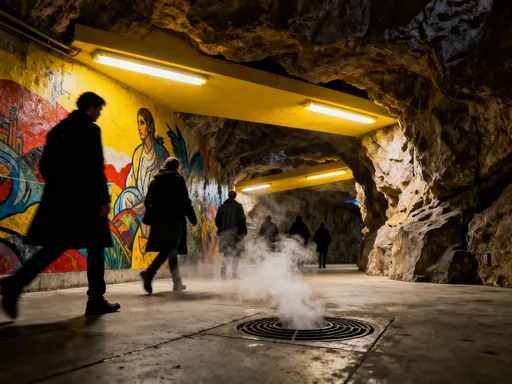
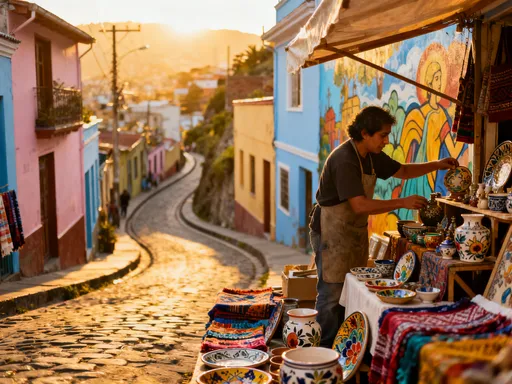
Hanoi’s cityscape moves to a rhythm painted in bold strokes and whispered in brushwork. Unlike cities where art is confined to museums, Hanoi wears its creativity on its sleeves—literally. Across districts like Hoan Kiem, Ba Dinh, and Hai Ba Trung, public walls are not blank spaces but evolving narratives. Street art here doesn’t shout rebellion; it hums tradition, memory, and community pride. Murals depict farmers tending rice paddies, grandmothers weaving silk, or children flying kites against golden sunsets. These images don’t just beautify—they ground the city in identity.
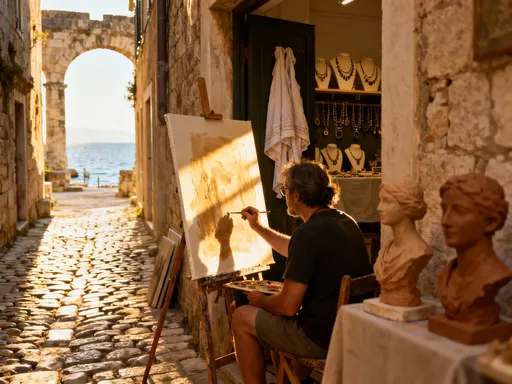
What makes Hanoi unique is how seamlessly art integrates with daily commerce. A noodle shop’s shutter doubles as a canvas. A narrow alley becomes an open-air exhibition. The visual language of the city blends old and new: traditional Vietnamese calligraphy in flowing script appears beside geometric graffiti and digital-style typography. This fusion isn’t accidental—it’s the result of a cultural ecosystem where aesthetics are part of economic survival. Shop owners know that a well-painted sign or a vibrant mural can draw eyes, slow footsteps, and turn passersby into customers.
Public spaces function as organic galleries. The city’s alleyways, often no wider than a motorbike, are lined with hand-painted tiles, mosaic art, and stenciled patterns. These aren’t commissioned by corporations but often created by local artists, students, or even shopkeepers themselves. The result is a decentralized, democratic art scene that thrives without institutional gatekeeping. This accessibility makes art part of everyday life, not a luxury reserved for weekends or special occasions. It also means that art evolves with the city—responsive, adaptive, and deeply rooted in place.
The economic impact is tangible. Studies from urban design researchers have shown that neighborhoods with strong visual identity and public art see increased foot traffic and longer visitor dwell times. In Hanoi, this isn’t just data—it’s lived reality. A colorful mural might lead tourists to stop for a coffee, which leads them to notice a nearby tailor, which introduces them to a family-run craft shop. Art becomes the first point of engagement, the silent ambassador of local enterprise. It doesn’t replace commerce—it amplifies it.
Old Quarter: Where Heritage Sells with Style
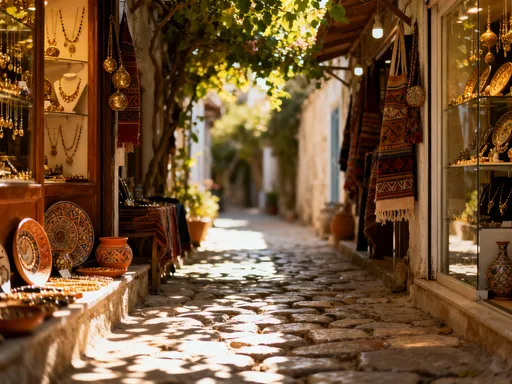
Step into Hanoi’s Old Quarter, and you step into a living museum of commerce and craft. With its origins tracing back over a thousand years, this historic district is famous for its 36 streets, each traditionally dedicated to a single trade—silk, spices, lanterns, silver, paper, and more. But what sets the Old Quarter apart today is not just its history, but how that history is visually communicated. Every storefront is a statement, a blend of function and artistry that turns commerce into culture.
Walk down Hang Gai Street, once known for silk production, and you’ll see shops where hand-painted signs hang beside embroidered áo dài displays. The calligraphy is not printed but brushed by artisans who’ve studied the craft for decades. These signs aren’t just labels—they’re heirlooms, often passed down through generations. The brushwork itself carries meaning: the thickness of a stroke, the curve of a character, the choice of ink color—all convey tone, prestige, and identity. A gold-leafed sign speaks of luxury; a red banner with bold black script signals celebration and vitality.
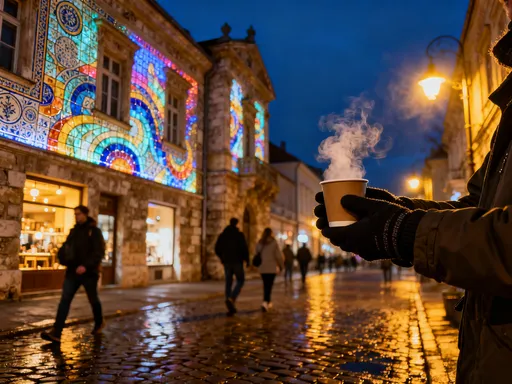
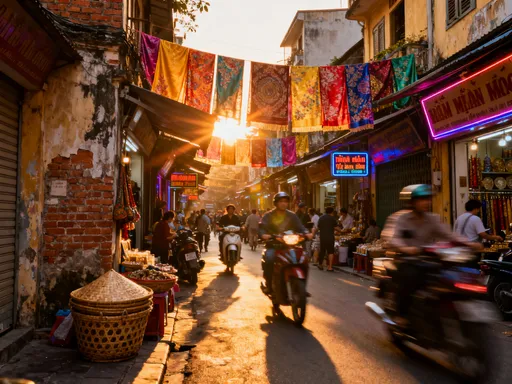
The sensory experience is overwhelming in the best way. The scent of roasted coffee drifts from sidewalk stalls, mingling with the sharp tang of fish sauce from nearby kitchens. Motorbikes weave through narrow lanes like schools of fish, their horns creating a rhythmic urban soundtrack. Above, silk banners flutter in the breeze, their colors—crimson, jade, saffron—catching the light like stained glass. These visuals aren’t random; they’re carefully curated. Shop owners understand that color psychology drives behavior. Warm tones invite; cool tones calm. Bright hues attract attention; muted ones suggest elegance.
This attention to aesthetic detail directly influences consumer behavior. A well-designed shopfront can increase customer dwell time by up to 40 percent, according to retail studies conducted in Southeast Asian cities. In the Old Quarter, where competition is fierce and space is limited, visual distinction is everything. A family-run textile shop might use mannequins dressed in traditional attire, posed like actors in a silent play. A spice vendor arranges turmeric, star anise, and cinnamon in rainbow spirals, turning raw ingredients into art. These displays don’t just sell products—they sell stories, heritage, and belonging.
Dong Xuan Market: Commerce with a Creative Core
At the heart of Hanoi’s commercial life lies Dong Xuan Market, the city’s largest indoor market and a masterpiece of functional artistry. More than just a place to buy goods, Dong Xuan is a symphony of color, pattern, and human energy. Spanning three floors and housing thousands of vendors, it’s a place where commerce and creativity coexist in perfect harmony. Here, visual merchandising isn’t a marketing tactic—it’s a survival skill.
From the moment you step inside, you’re greeted by a kaleidoscope of textiles. Bolts of silk, cotton, and brocade are stacked like books in a library, their colors arranged to catch the eye. Vendors use light, shadow, and contrast to highlight textures—matte against shiny, dark against light. Embroidered fabrics feature intricate patterns of dragons, lotuses, and phoenixes, each stitch a testament to hours of labor. These aren’t mass-produced imports; they’re handmade, often by artisans from rural villages who supply the market through family networks.
The ground floor buzzes with activity. Rows of stalls sell everything from kitchenware to children’s clothes, but even the most utilitarian items are presented with care. Ceramic bowls are stacked in pyramids. Plastic buckets are arranged in concentric circles. A vendor selling flip-flops might group them by color, creating a gradient from white to black. These arrangements aren’t arbitrary—they follow principles of balance, symmetry, and rhythm that are deeply embedded in Vietnamese design tradition. Even in a crowded, chaotic environment, there’s an underlying order, a visual grammar that guides the eye and the hand.
What’s remarkable is how these practices are passed down informally. Young apprentices learn not from textbooks but by watching their elders—how to fold fabric, how to drape a scarf, how to position a mannequin. There’s an unspoken code of visual etiquette: bright colors in front for visibility, neutral tones in back for contrast; high-margin items at eye level, essentials below. These rules aren’t written down, but they’re followed with near-universal consistency. It’s a form of indigenous retail science, refined over generations.
Artisan Alleys: Behind the Made-in-Vietnam Label
Beyond the tourist paths and market halls, Hanoi’s true creative engine hums in its artisan alleys—narrow lanes where craftsmanship is not a profession but a way of life. These neighborhoods, often overlooked by guidebooks, are where lacquerware is polished, bronze statues are cast, and paper lanterns are hand-glued. Here, production isn’t hidden behind factory walls; it spills onto sidewalks, turning labor into performance, and workshops into open studios.
In Hang Bong Street, lacquer artisans sand and layer bowls with meticulous care. Each piece undergoes dozens of coats, each sanded to a mirror finish. The process can take weeks, even months. Visitors often stop to watch, drawn by the rhythmic scraping of sandpaper and the rich, earthy scent of natural lacquer. The artisans don’t mind—they’re used to eyes. In fact, they welcome them. A watching customer might become a buyer; a curious tourist might share a photo online. Visibility is part of the business model.
Similarly, in Hang Bac, the silver street, jewelers hammer, solder, and engrave in full view. The clink of metal on metal is a constant soundtrack. Behind glass cases, finished pieces gleam—delicate bangles, ornate pendants, ceremonial combs. But the real artistry is in the making. The precision, the patience, the quiet focus—these are the values embedded in every object. And because the work is visible, so is the value. Customers understand why a handmade silver ring costs more than a factory-made one. They’ve seen the hours, the skill, the soul behind it.
These artisan zones are not frozen in time. They evolve in response to global demand. Export markets in Japan, France, and the United States have influenced design trends—simpler lines, minimalist motifs, eco-friendly materials. But the core techniques remain unchanged. Artisans adapt without losing authenticity. A lacquer box might now feature a modern geometric pattern, but it’s still made with traditional sap from the sơn tree. A bronze incense burner might have a contemporary shape, but it’s still cast using the lost-wax method practiced for centuries. This balance between innovation and tradition is what makes Hanoi’s craftsmanship globally respected.
New Districts, New Canvases: Art in Modern Retail Spaces
As Hanoi expands, so does its artistic footprint. In newer commercial districts like Vincom Center, Times City, and Royal City, art is no longer just on the streets—it’s inside, curated, and collaborative. These modern malls could easily feel generic, like shopping centers anywhere in the world. But Hanoi’s developers and brands have chosen a different path: one where Vietnamese art is central to the retail experience.
Walk into Vincom Mega Mall Royal City, and you might find a large-scale installation of bamboo sculptures suspended from the ceiling, swaying gently in the air conditioning. Or a mural by a young Hanoi artist depicting a futuristic city built from traditional tiles and lotus flowers. These aren’t decorative afterthoughts—they’re strategic partnerships between malls and local art collectives. The goal is clear: to create spaces that feel uniquely Vietnamese, not just internationally functional.
Brands, too, are embracing this trend. Fashion labels collaborate with painters to create limited-edition packaging. Coffee chains commission murals that reflect neighborhood history. Even tech stores use art to soften their industrial aesthetic. A smartphone kiosk might be framed by a kinetic sculpture made of recycled metal, turning a sales point into a conversation piece. These integrations do more than beautify—they build emotional connections. Shoppers don’t just buy a product; they take home a piece of the city’s spirit.
The audience for these spaces is younger, more digitally native, and more design-conscious. They don’t just want to shop—they want to experience, to photograph, to share. Art makes the space Instagrammable, yes, but more importantly, it makes it memorable. A study by the Vietnam Retail Association found that 68 percent of young consumers are more likely to visit a mall that hosts local art exhibitions. This isn’t just about aesthetics—it’s about identity. Young Vietnamese want to support brands that reflect their culture, not erase it.
The Role of Festivals and Pop-Ups in Urban Commerce
While permanent art spaces shape Hanoi’s landscape, it’s the temporary events that ignite its creative spark. Festivals like the Hanoi Creative City Festival, weekend craft markets, and pop-up design bazaars transform underused plazas, parking lots, and riverbanks into vibrant commercial-artistic zones. These events are more than just sales opportunities—they’re community experiments in urban renewal.
During the Hanoi Creative City Festival, entire blocks are closed to traffic. Artists paint live, musicians perform, and designers showcase handmade goods. A disused warehouse becomes a gallery. A quiet park turns into a food and craft village. These transformations are temporary, but their impact is lasting. They prove that public space can be both beautiful and productive. They also provide a low-barrier entry for small businesses and independent creators who can’t afford permanent storefronts.
Pop-up markets, often held on weekends, have become cultural fixtures. Held in places like Ly Thai To Garden or along the Red River promenade, they feature young designers selling hand-stitched bags, ceramic jewelry, and natural-dye textiles. These events are curated for authenticity—vendors are often vetted for originality and craftsmanship. Unlike mass-market fairs, these pop-ups emphasize quality, story, and sustainability. Shoppers don’t just buy a tote bag—they hear about the artisan who grew the cotton, dyed it with turmeric, and stitched it by hand.
These events also foster community. Local residents, expats, and tourists mingle freely. Children participate in painting workshops. Elderly couples sit on benches, watching the energy unfold. The city feels alive, inclusive, and forward-looking. For small business owners, the exposure can be transformative. A single weekend market might lead to online orders, collaborations, or even a permanent shop. The festival model proves that art and commerce don’t have to be at odds—they can uplift each other.
Navigating the Art-Commerce Balance: Challenges and Future Paths
Yet, Hanoi’s artistic commercial model is not without challenges. As the city grows, so do pressures of over-commercialization, gentrification, and cultural dilution. In some parts of the Old Quarter, traditional workshops have been replaced by souvenir shops selling mass-produced trinkets. Rent increases push out long-time artisans in favor of trendy cafes with Instagram walls. The very success of the art-commerce blend threatens to undermine its authenticity.
City planners and artists are responding with thoughtful initiatives. The Hanoi Department of Culture has launched programs to preserve artisan streets, offering subsidies to families who maintain traditional crafts. Some districts have implemented zoning laws that limit foreign-owned retail in heritage areas. Art collectives have started residency programs, pairing young creators with master artisans to ensure knowledge transfer. These efforts aren’t about stopping change—they’re about guiding it with intention.
Another concern is the risk of art becoming merely decorative—valued for its marketability rather than its meaning. When murals are created solely to attract tourists, they can lose their depth. The solution lies in community involvement. Projects that engage local residents in the creative process—choosing themes, contributing stories, participating in painting—tend to be more sustainable and meaningful. Art that reflects the people, not just the marketplace, endures.
Looking ahead, Hanoi’s model offers inspiration far beyond Vietnam. In a world where global retail chains homogenize cityscapes, Hanoi proves that local character can be an economic asset. When art leads commerce, the result is not just profit—it’s pride, connection, and continuity. The city’s streets teach us that markets don’t need to be soulless to be successful. They can be vibrant, human, and beautiful.
Hanoi proves that markets don’t have to be soulless to be profitable. When art leads the way, commerce becomes meaningful. The city’s streets aren’t just places to buy—they’re stories to experience. In a world of generic malls and digital shopping, Hanoi’s artistic commercial zones remind us that humanity still has a place in the marketplace. Maybe the future of retail isn’t efficiency—it’s emotion. And if you haven’t felt it yet, you should.