You Won’t Believe What I Ate in Jaipur
Jaipur isn’t just about palaces and pink walls—its food scene blew my mind. From sizzling street snacks to royal Rajasthani thalis, every bite told a story. I went in looking for a meal and left with memories that stick to your soul. This is not your average tourist food run—it’s a deep dive into flavors most travelers never discover. The city pulses with culinary life, where centuries-old recipes are passed down through generations and served on paper plates at roadside stalls. What makes Jaipur’s cuisine so unforgettable isn’t just the bold spices or the rich textures—it’s the sense of belonging you feel when someone hands you a warm, freshly fried kachori with a smile. This is food rooted in survival, shaped by desert winds, and elevated by pride. Here, every dish carries a legacy, and every meal becomes a quiet conversation with history.
First Bites: My Arrival in Jaipur and the Snack That Hooked Me
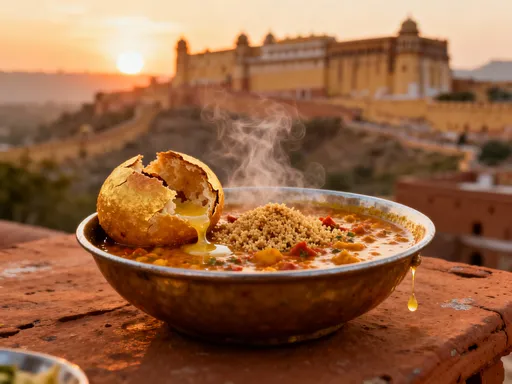
The moment I stepped out of the airport, the dry desert air wrapped around me like a warm blanket. By the time I reached my guesthouse near the old city, hunger had taken hold. I didn’t wait for a fancy dinner—I followed the scent of frying dough and spices drifting through the evening breeze. Just off Johari Bazaar, tucked between a jewelry shop and a sari vendor, stood a small wooden cart where a man in a crisp white apron flipped golden-brown kachoris in a bubbling vat of oil. There was no sign, no menu—just a steady stream of locals placing quick orders and walking away with paper-wrapped parcels.
I pointed at what everyone else was eating. Within seconds, a hot kachori landed in my hand, still crackling from the fryer. The first bite sent a jolt through my senses: crisp outer shell giving way to a soft, spiced lentil filling, then a burst of tangy tamarind chutney that danced on the tongue. It was messy—oil dripped down my fingers, chutney smeared my wrist—but it was perfect. This wasn’t just food; it was an initiation. I realized then that Jaipur’s soul wasn’t in its monuments, but in these unassuming corners where flavor ruled and presentation didn’t matter.
What surprised me most was how central street food is to daily life here. Unlike in cities where fast food means chains, in Jaipur, it means handmade, freshly fried, and deeply regional. The vendor told me he starts at 4 a.m., preparing dough and fillings before the sun rises. His customers? Office workers, rickshaw drivers, students—people who begin their day with this ritual. I returned the next morning and stood in line beside them, learning that the best meals aren’t scheduled—they’re discovered.
Beyond the Thali: Understanding Rajasthani Cuisine’s Roots
Most visitors to Jaipur are introduced to Rajasthani cuisine through the thali—a round platter holding small bowls of dal, baati, churma, vegetables, and chutneys. It’s colorful, generous, and undeniably delicious. But beyond its visual appeal lies a deeper truth: this cuisine was born out of necessity. Rajasthan is one of the driest regions in India, where water is scarce and fresh produce isn’t always available. Every dish had to be practical—able to last for days, transportable, and packed with nutrients to sustain energy in extreme heat.
Dal baati churma, the state’s most iconic meal, is a masterpiece of adaptation. Baati, the hard wheat rolls, are baked until rock-solid so they don’t spoil easily. When served, they’re dipped in ghee and broken open to reveal a soft interior. The dal, slow-cooked with spices and buttermilk, is preserved using fermentation techniques passed down through generations. Churma, made by crushing baati and mixing it with ghee and jaggery, serves as a high-energy dessert that could fuel a traveler for hours. This wasn’t fine dining—it was survival turned into art.
Another example is ker sangri, a curry made from dried desert berries (ker) and beans (sangri) that grow naturally in the arid soil. These ingredients are sun-dried and stored for months, rehydrated when needed, and cooked with mustard seeds, cumin, and red chilies. The result is a tangy, slightly sour dish that cuts through richness and refreshes the palate. It’s not something you’d find on mainstream Indian menus abroad, but in Jaipur, it’s a staple in homes and local eateries. Understanding these roots transforms the way you taste the food—it’s no longer just flavor, but resilience on a plate.
Street Food Deep Dive: Where the Locals Eat
If you want to eat like a Jaipuri, you have to follow the smoke. Every evening, as the sun dips behind the city walls, street vendors fire up their stoves and begin the nightly ritual of feeding the city. I spent days wandering narrow alleys behind Bapu Bazaar and Tripolia Bazaar, where the air hums with the sizzle of oil, the clatter of steel bowls, and the rhythmic thud of spice grinders. This is where authenticity thrives—far from air-conditioned restaurants with English menus.
One evening, I found a tiny tapri where a man in his fifties stood over a wide kadhai, flipping pyaaz kachoris with practiced ease. He explained that the onion filling is cooked slowly for over an hour, allowing the natural sugars to caramelize and deepen in flavor. The dough is layered like puff pastry, brushed with ghee between each fold, then deep-fried until golden. He handed me one with a squeeze of lime and a spoonful of mint-coriander chutney. The contrast was extraordinary—crunchy, sweet, spicy, and cooling all at once. I ate it standing up, leaning against a wall, feeling more connected to the city than I had at any museum.
Another revelation was mawa kachori—a dessert so rich it feels like a secret. Found mostly in Nathdwara and Udaipur but increasingly popular in Jaipur, this sweet version is stuffed with mawa (reduced milk), nuts, and cardamom, then fried and dipped in sugar syrup. It’s decadent, almost fudge-like in texture, and best eaten in small bites. I tried it at a small shop near Chandpole, where the owner proudly said his family has been making it for four generations. One bite melted on my tongue, leaving behind a warmth that lingered long after the plate was empty.
Royal Flavors: Dining Like Maharajas Without the Price Tag
Jaipur’s royal past is evident in its grand forts and palaces, but it’s also preserved in its kitchens. The cuisine of the Rajput kings was elaborate, spiced with saffron, cloves, and rose water, and cooked in copper vessels over wood fires. While some heritage hotels offer curated royal dinners for tourists, I was determined to taste these flavors without paying a king’s ransom.
My search led me to a modest restaurant near Amer Fort, unassuming from the outside but packed with locals every night. It was run by a family whose ancestors once cooked for the royal household. There, I tried laal maas, the legendary mutton curry known for its intense heat. Unlike the tame versions served in tourist spots, this one used Mathania chilies—native to Rajasthan—slow-cooked in yogurt and spices for hours. The heat didn’t hit immediately; it built slowly, warming the chest and clearing the sinuses, balanced by the cooling effect of a side of kadhi and a dollop of fresh yogurt.
The owner, Mr. Singh (who insisted I call him Raju Bhaiya), shared stories of how royal chefs would grind spices by hand and marinate meat overnight. “They didn’t rush,” he said. “Food was a form of respect.” His kitchen still uses wood-fired stoves, and the meat is cooked in earthen pots sealed with dough to lock in moisture. I also tried safed maas, a lesser-known white curry made with cream, nuts, and mild spices—a delicate contrast to its fiery cousin. These dishes weren’t just meals; they were echoes of a time when cooking was an act of honor.
Hidden Cafés and Modern Twists: Jaipur’s Quiet Food Revolution
While tradition remains strong, Jaipur is quietly embracing change. In neighborhoods like Sindhi Colony and Vaishali Nagar, a new generation of chefs and entrepreneurs is reimagining Rajasthani flavors through a modern lens. These aren’t fusion gimmicks—they’re thoughtful blends that respect the past while inviting new palates.
I stumbled upon one such café tucked behind a bookshop, its walls painted in earthy tones and shelves lined with cookbooks. The menu featured masala chai lattes made with house-blended spices—cardamom, cinnamon, and black pepper—steamed with milk and served in ceramic mugs. It was familiar yet elevated, like childhood memories filtered through a grown-up sensibility. I also tried their ghevar cheesecake—a dessert that sounded absurd on paper. Ghevar, a traditional honeycomb-shaped sweet soaked in sugar syrup, was layered with cream cheese mousse and a hint of saffron. It shouldn’t have worked, but it did. The crispness of the ghevar contrasted beautifully with the smooth filling, and the flavors married perfectly.
Another standout was a restaurant offering Rajasthani tacos—yes, tacos—using millet-based tortillas filled with ker sangri or dal baati crumble, topped with mint chutney and pomegranate seeds. It was playful, creative, and surprisingly respectful of the ingredients. These spaces attract young professionals, digital nomads, and curious travelers who want to engage with local culture without sacrificing comfort. They prove that Jaipur’s food identity isn’t frozen in time—it’s evolving, one thoughtful bite at a time.
Dining Etiquette and Practical Tips for Food Travelers
Eating in Jaipur is as much about culture as it is about flavor. There are unwritten rules that, once understood, make the experience richer and more respectful. The most important: always eat with your right hand. In many traditional settings, especially at street stalls and home-style eateries, food is served on banana leaves or paper plates, and cutlery is absent. The left hand is considered unclean in many Indian cultures, so using the right hand is both practical and polite.
Washing your hands before and after eating is essential, particularly when dining at roadside spots. Most vendors keep a bucket and soap nearby, and it’s common to see locals scrubbing up before their meal. Carry hand sanitizer as a backup, but embrace the ritual—it’s part of the experience. When drinking, stick to bottled water and avoid ice unless you’re in a high-end restaurant with reliable filtration. Nimbu pani—lemon water with salt and roasted cumin—is a safe and refreshing choice, especially in the heat.
Tipping is modest but appreciated. At street stalls, ₹10–20 (about 10–25 cents) is generous. In small restaurants, rounding up the bill or leaving a few extra rupees is enough. Don’t overtip—it can make people uncomfortable. And while bargaining is common in markets, never haggle over food prices at local eateries. These vendors work hard for every rupee, and their prices are already fair. Most importantly: arrive hungry, eat slowly, and ask questions. Many cooks are proud of their craft and happy to share stories if you show genuine interest.
Why Jaipur’s Food Stays With You Long After You Leave
Months after returning home, I still dream about the flavors of Jaipur. Not because they were the most complex or refined I’ve ever tasted, but because they were alive with meaning. Each meal felt like a connection—to the land, to the people, to a history that refuses to be forgotten. I remember the old woman in a blue sari who handed me a piece of ghevar from her kitchen window, insisting I try it “for luck.” I remember the teenage boy at a roadside paneer tikka stall who smiled as he handed me a foil-wrapped skewer, saying, “This one’s extra spicy—just how we like it.”
What lingers isn’t just the taste of cumin and chili, but the warmth behind the gesture. In Jaipur, food is not a transaction—it’s an offering. It’s made with care, shared with pride, and served with a quiet dignity. Even the simplest meal carries the weight of centuries, transformed by hands that know every step by heart. You don’t just eat here; you remember. You carry the crunch of a kachori, the heat of laal maas, the sweetness of mawa kachori in your mind like souvenirs no suitcase can hold.
And perhaps that’s the real magic of Jaipur’s cuisine: it doesn’t end when the plate is empty. It follows you home, whispering in your kitchen as you try to recreate a chutney, or in your morning tea, where a hint of cardamom suddenly feels like a memory. It’s not just food. It’s a feeling. It’s a story. It’s a place where every bite feeds more than your body—it feeds your soul.
Jaipur’s dining experience is a journey through history, resilience, and heart. It’s messy, bold, and unforgettable. Go for the forts, stay for the food—and let every bite tell you the story no guidebook ever could.