Where Art Meets the Andes — Cusco’s Wild Canvas
Nestled high in the Peruvian Andes, Cusco isn’t just a gateway to Machu Picchu — it’s a living masterpiece. The way light spills over terraced mountains, how colors dance on colonial walls, and how nature shapes every view feels like walking through an open-air painting. I didn’t expect to find art not just in galleries, but carved into cliffs, woven into fields, and reflected in glacial lakes. This is where raw nature becomes inspiration, and every valley tells a story.
The First Glimpse: Arrival in Cusco and the Art of Altitude
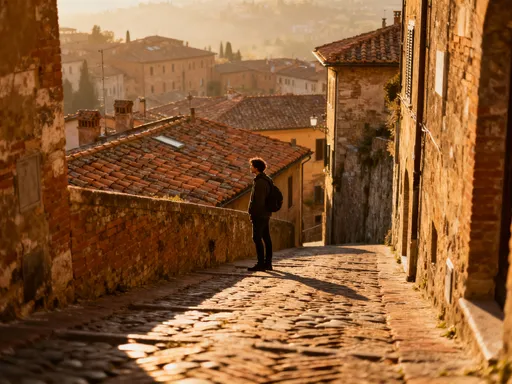
Descending into Cusco, travelers are immediately met with the quiet intensity of high-altitude life. At 3,400 meters above sea level, the air is thinner, cooler, and carries a clarity that sharpens the senses. The first breaths are often labored, a reminder that this city demands presence, not haste. Every step feels deliberate, every glance more focused. This is not a place to rush through. The altitude enforces a slower rhythm, encouraging visitors to observe more closely — the way shadows stretch across cobblestone streets, how sunlight catches the edges of red-tiled roofs, or how the distant Andes fade into soft blue haze. This heightened awareness becomes the first brushstroke in Cusco’s artistic experience.
The city’s layout itself is a fusion of ancient intention and colonial adaptation. Originally designed by the Inca as a sacred puma-shaped capital, Cusco’s streets still follow the organic curves of the original plan. Spanish colonizers built churches and plazas atop Incan foundations, creating a layered skyline where Baroque domes rise beside precisely cut stonework. The contrast is not chaotic but harmonious — like a duet between two distinct artistic traditions. The central Plaza de Armas, once the ceremonial heart of the Inca Empire, now hosts both colonial architecture and indigenous markets, its symmetry echoing the geometric precision valued by both cultures. Walking through the city feels like moving through a timeline rendered in stone and mortar.
What makes Cusco’s artistry unique is not just what you see, but how you see it. The high elevation alters perception. With less oxygen, movements slow, and the mind becomes more attuned to detail. A carved doorway, a patch of lichen on a wall, or the sound of a flute drifting from an alleyway — these small moments gain significance. The thin air acts as a natural filter, intensifying colors and deepening contrasts. Sunsets here don’t just fade; they explode in hues of amber, rose, and violet, casting long, dramatic shadows across the hills. This atmospheric quality transforms ordinary scenes into painterly compositions, as if the city itself is curated by light.
Sacred Geometry: How Incan Design Mirrors Nature
Scattered across the hills surrounding Cusco lie the ruins of an empire that saw architecture as an extension of the natural world. At sites like Sacsayhuamán and Q’enqo, Incan builders did not impose their will on the landscape — they listened to it. The massive stone walls of Sacsayhuamán, constructed without mortar, fit together so precisely that not even a blade can slip between them. These stones were shaped to follow the contours of the ridge, creating a structure that appears to grow from the mountain itself. The angles and curves of the walls mirror the surrounding peaks, as if the builders were replicating the language of the earth.
This architectural harmony is not accidental. Incan design was deeply rooted in cosmology — the belief that humans, nature, and the cosmos are interconnected. Structures were aligned with celestial events, such as the solstices, and positioned to reflect sacred geography. At Q’enqo, a ceremonial site just outside the city, carved rock channels and circular altars suggest rituals tied to water, earth, and the sun. The site’s name means “labyrinth” in Quechua, and its winding paths may have been used for spiritual journeys, guiding participants through a symbolic passage between worlds. The artistry here is not decorative but functional, embedded with meaning and purpose.
The Incas used geometry not for abstraction but for alignment — with nature, the stars, and spiritual forces. Their buildings often follow the flow of rivers, the curve of valleys, or the tilt of the sun. This reverence for natural form turned construction into a meditative practice. Unlike modern architecture, which often seeks to dominate the environment, Incan design sought to belong within it. The result is a series of sites that feel less like ruins and more like living parts of the landscape. Visitors often report a sense of calm when standing among these stones, as if the geometry itself resonates with a deeper order.
Colors of the Earth: Pigments Born from the Land
Just beyond the town of Pisac, in the Sacred Valley, women sit outside their homes, spinning wool with spindles that have changed little in centuries. Their hands move with practiced ease, drawing thread from alpaca fiber dyed in colors that seem to come directly from the earth. These are not synthetic hues but natural pigments — reds from cochineal insects, yellows from marigold flowers, deep purples from mollusk secretions, and browns from tree bark. The dyes are mixed with minerals and clay, each shade carrying the essence of the Andes. This tradition is not merely craft; it is a form of environmental storytelling, where color becomes a record of place.
Visiting a weaving cooperative in the region reveals how closely art and ecology are intertwined. The patterns woven into textiles often represent local landscapes — zigzags for mountain ridges, wavy lines for rivers, geometric fields that mirror agricultural terraces. Some designs honor animals like the condor or puma, while others encode spiritual symbols passed down through generations. Each piece is unique, created without patterns or sketches, relying instead on memory and intuition. The weavers speak of their work as a dialogue with ancestors, a way of keeping culture alive through touch and color.
What makes this tradition sustainable is its reliance on renewable resources. Cochineal, for instance, is harvested from cacti without harming the plants. Natural dyes require no industrial processing, leaving minimal environmental impact. In a world increasingly aware of fast fashion’s toll, these practices offer a model of slow, intentional creation. More than preserving heritage, they embody a philosophy: that beauty should not come at the cost of the earth. Tourists who purchase these textiles support not just artisans but an entire ecosystem of knowledge, respect, and reciprocity.
The Living Palette: Agricultural Terraces as Art Installations
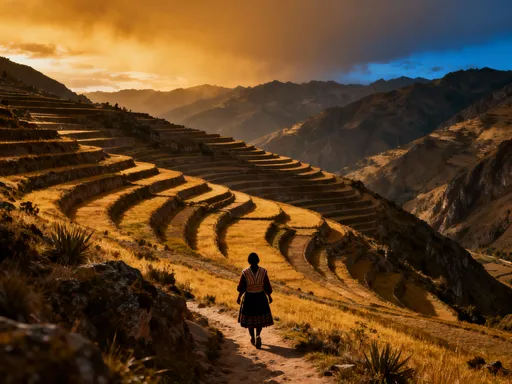
Across the Andes, the land has been shaped not only by erosion and time but by human hands working in concert with nature. The agricultural terraces of Moray and Maras are often studied for their engineering brilliance, but they are equally remarkable as visual compositions. From above, Moray’s concentric circular pits resemble a spiral galaxy frozen in the earth. Each level creates a microclimate, allowing crops to grow at different temperatures, but the effect is also deeply aesthetic — a sculptural landscape that shifts with the sun. In the morning light, the shadows deepen the curves; by afternoon, the terraces glow in warm earth tones.
Equally striking are the salt ponds of Maras, a network of thousands of shallow pools cascading down a hillside. Fed by a subterranean spring rich in minerals, these ponds have been used for salt harvesting for centuries. When filled with water, they reflect the sky like fractured mirrors; when dry, they glisten in shades of white, pink, and gold. The patterns are irregular yet harmonious, changing daily with evaporation and refilling. This is not a static artwork but a living one, shaped by weather, labor, and time. Locals manage the ponds communally, each family maintaining their own section, ensuring both cultural continuity and environmental balance.
These sites challenge the separation between utility and beauty. They were built to feed communities, yet they possess an undeniable artistic presence. The terraces follow the natural slope of the land, their curves echoing the surrounding hills. Crops planted in rotation create a shifting palette — green in spring, gold in harvest, brown in fall. Unlike modern monocultures, these systems celebrate diversity, both in plant life and visual texture. They remind us that agriculture need not be industrial to be effective; it can be regenerative, culturally rich, and visually stunning. In a time of climate uncertainty, such models offer inspiration for a more harmonious relationship with the land.
Sky-High Canvases: Landscapes That Inspired a Culture
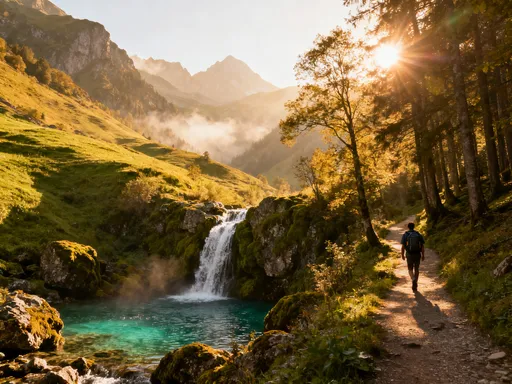
For those willing to hike beyond the well-trodden paths, the Andes reveal vistas that feel less like scenery and more like sacred art. The ascent to Huayna Picchu, the peak looming above Machu Picchu, rewards climbers with a panoramic view that seems painted by an epic imagination. Stone ruins cling to cliffs, clouds drift through deep valleys, and the Urubamba River snakes below like a silver thread. The composition is so perfect, so balanced, that it feels unreal — as if nature composed it specifically to inspire awe. Indigenous communities have long regarded such places as wak’as, or sacred beings, worthy of reverence rather than conquest.
Another such site is Vinicunca, known as Rainbow Mountain. Once obscure, it has gained fame for its striated slopes of red, purple, yellow, and turquoise. These colors come from mineral deposits — iron oxide, magnesium, and sulfur — exposed by erosion. While the influx of tourists has raised concerns about environmental strain, the mountain remains a powerful symbol of nature’s artistic capacity. Standing before it, one cannot help but feel small, humbled by the slow, immense forces that created such beauty. Local guides often begin visits with a quiet offering, a gesture of gratitude to the mountain spirit, reinforcing the idea that such places are not merely to be seen but honored.
These landscapes do more than impress — they shape culture. Traditional Andean music, with its flutes and panpipes, mimics the wind through canyons and the calls of highland birds. Dances often tell stories of planting, harvest, and celestial events, their movements echoing the flow of rivers and rotation of seasons. Even daily routines reflect an awareness of nature’s rhythms — farmers planting by lunar cycles, families gathering at sunset. Art here is not separate from life; it emerges from it. The grandeur of the Andes does not just inspire creativity — it demands a certain way of being, one rooted in observation, respect, and reciprocity.
Modern Expressions: Contemporary Art Rooted in Nature
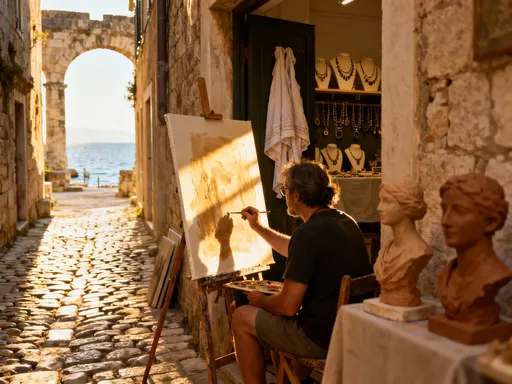
In Cusco’s historic center, a new generation of artists is redefining what Andean art can be. Galleries like Centro de Textiles Tradicionales del Perú and smaller studios tucked into narrow alleys showcase work that honors tradition without replicating it. Painters use natural pigments on canvas, blending ancient color palettes with modern compositions. Sculptors shape stone and wood with techniques passed down for generations, but their subjects often reflect current concerns — deforestation, water scarcity, cultural preservation. The art is not nostalgic; it is alive, responding to the present while staying rooted in place.
One emerging trend is the use of recycled and organic materials. Artists incorporate discarded textiles, reclaimed wood, and even volcanic ash into their pieces, creating textures that mirror the Andean environment. A sculpture might mimic the cracked surface of dried earth, or a painting could embed fibers that resemble woven cloth. These choices are not just aesthetic — they are ethical, reflecting a commitment to sustainability and a critique of consumer culture. Some artists collaborate with local communities, ensuring that their work supports rather than exploits traditional knowledge.
What sets Cusco’s contemporary scene apart is its authenticity. Unlike tourist markets filled with mass-produced souvenirs, these spaces prioritize meaning over marketability. Exhibitions often include descriptions in Quechua as well as Spanish and English, affirming the value of indigenous language and perspective. Art openings feel more like community gatherings than commercial events. This is art that speaks to locals first, inviting outsiders to listen rather than dominate. In doing so, it preserves cultural integrity while remaining open to dialogue and evolution.
Traveler’s Lens: Capturing Beauty Without Exploitation
With such breathtaking scenery, it is natural for visitors to want to photograph every moment. Yet the act of seeing — especially through a lens — carries responsibility. Fragile ecosystems like high-altitude grasslands and salt ponds can be damaged by foot traffic, litter, or even the pressure of a tripod. Rainbow Mountain, for instance, has seen erosion increase with tourism, prompting local authorities to implement regulated access and guided-only visits. Responsible travel means respecting these rules, staying on marked paths, and avoiding actions that prioritize the perfect photo over environmental health.
Timing also matters. Visiting popular sites early in the morning or late in the afternoon not only offers better light for photography but reduces crowding and environmental strain. Choosing low-impact transportation — hiking, cycling, or using shared shuttles — further minimizes one’s footprint. Equally important is engaging with local communities in ways that honor their autonomy. Instead of staging photos with people as props, travelers are encouraged to ask permission, learn names, and listen to stories. A simple conversation can yield more meaningful memories than a hundred snapshots.
Perhaps the most transformative approach is slow travel — staying longer, returning seasonally, and allowing the landscape to reveal itself gradually. Rushing from site to site turns art into checklist items. But lingering in one place, watching how light changes at different hours, or learning to identify native plants and birds, fosters a deeper connection. It shifts the traveler from observer to participant. When beauty is approached with humility and care, it becomes not just something to capture, but something to protect.
Cusco teaches us that art doesn’t need frames — it breathes in mountains, flows in rivers, and lives in hands that shape wool, stone, and soil. The true masterpiece isn’t a single view or painting, but the ongoing dialogue between people and their environment. To witness this is to understand that beauty isn’t just seen — it’s felt, respected, and preserved.