You Won’t Believe How Urban Life Thrives on the Shores of Lake Como
Lake Como, Italy, is more than just villas and lake views—it’s a hidden urban playground. I was stunned to discover how modern life quietly pulses through its historic streets. From repurposed 19th-century buildings to vibrant piazzas buzzing at dusk, the blend of old and new feels seamless. This isn’t just a getaway; it’s a living, breathing cityscape wrapped in alpine beauty. Let me take you where travel guides don’t—into the soul of Como’s urban space. Beyond the glossy brochures and celebrity snapshots lies a town shaped by daily rhythms, thoughtful design, and quiet resilience. Here, centuries-old stone walls house contemporary cafes, fishermen unload their morning catch beside ferry docks, and children play football in courtyards where silk once dried in the sun. This is urban life reimagined—not in spite of history, but because of it.
Reimagining Lake Como: Beyond the Postcard
Lake Como is often framed as a serene retreat, a place of stillness and indulgence nestled between towering mountains and shimmering water. Travel magazines spotlight grand villas draped in bougainvillea, private boats gliding silently across glassy surfaces, and celebrities lounging on terraces with panoramic views. While these images hold truth, they capture only a fraction of the region’s identity. Beneath the postcard perfection lies a functioning, evolving urban center—dynamic, layered, and deeply rooted in everyday life. Como is not merely a scenic backdrop; it is a city with schools, markets, public transit, and a civic heartbeat that persists regardless of tourist seasons.
The misconception that Como is purely rural or resort-like overlooks its long-standing role as a regional hub. For centuries, it has served as a commercial and cultural nexus between northern Italy and the Alpine passes leading into Switzerland. Its location at the southern tip of the Y-shaped lake made it a natural crossroads for trade, transportation, and communication. Today, this legacy continues in the form of a well-connected urban core where locals commute, shop, and socialize with a rhythm independent of visitor flows. The city’s identity is not defined by escape, but by continuity—by the ongoing negotiation between preservation and progress.
What sets Como apart is how effortlessly it integrates its dual roles: a world-famous destination and a lived-in community. Unlike some tourist-heavy towns that hollow out after peak season, Como maintains a stable population of around 80,000 residents who shape its character year-round. Their presence ensures that the city retains authenticity, resisting the fate of becoming a museum piece frozen in time. Sidewalks are worn not just by travelers, but by generations of families walking to school, workers heading to offices, and elders meeting for afternoon coffee. This enduring civic life gives Como an urban depth often missed by those who visit only to photograph its beauty.
Understanding Como as an urban entity shifts the traveler’s perspective from passive observation to active engagement. Instead of viewing the town through the lens of nostalgia or luxury, one begins to appreciate its functional elegance—the way narrow alleys accommodate delivery trucks, how ferry schedules align with work hours, and how festivals transform public squares without disrupting daily routines. This is not a place frozen in the past, but one that adapts with grace. Recognizing this duality allows visitors to move beyond surface-level tourism and connect with the living pulse of the lakeside city.
The Pulse of Como: City Layout and Public Spaces
At first glance, Como’s city center appears organically grown, a tangle of cobbled lanes and sudden piazzas that seem to follow no logic. Yet upon closer inspection, a thoughtful urban structure emerges—one shaped by geography, history, and deliberate planning. The city unfolds in a compact grid radiating from the lakefront, where the waterfront promenade serves as both a scenic walkway and a functional spine connecting neighborhoods. This linear axis anchors daily movement, linking the train station, ferry terminal, and central business district in a seamless flow. Pedestrian priority zones dominate the historic core, ensuring that foot traffic remains unimpeded while vehicles are routed through peripheral roads or restricted to specific hours.
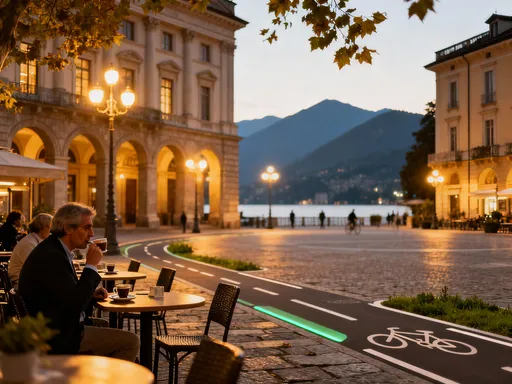
Two central piazzas stand out as vital nodes in Como’s urban network: Piazza Cavour and Piazza San Fedele. Piazza Cavour, stretching along the lake, functions as a social stage where residents gather in the evenings, children chase pigeons, and outdoor cafes spill onto stone pavements. Its open expanse provides breathing room within the dense fabric of the city, offering views across the water while serving as a transit point for ferries and strolling families. In contrast, Piazza San Fedele, nestled in the medieval quarter, pulses with a more intimate energy. Framed by the striking Renaissance façade of the Collegio Gallio and surrounded by artisan shops and bakeries, it operates as a neighborhood living room—a place for brief encounters, coffee breaks, and the quiet rituals of local life.
Urban vitality in Como is also evident in the integration of modern infrastructure within historic settings. Bike lanes, though limited, are gradually expanding along key corridors, reflecting a growing emphasis on sustainable mobility. Public transit—including buses, ferries, and the funicular to Brunate—is reliable and widely used by residents, reducing dependence on private cars. The ferry system, in particular, plays a dual role: it is both a tourist attraction and a practical commuting option, connecting lakeside towns with efficiency and charm. These systems function not as afterthoughts, but as embedded components of the city’s circulatory system.
The natural topography profoundly influences urban design. Lake Como’s narrow basin and steep slopes compress development into a slender ribbon along the shore, resulting in a vertical cityscape where buildings climb the hillsides in terraced layers. This constraint has led to innovative solutions—multi-level streets, hidden staircases, and underground parking—that maximize space without sacrificing aesthetics. The interplay between land and water dictates movement patterns, with many routes culminating at the lakeshore, reinforcing the centrality of the water in both practical and symbolic terms. In this way, Como’s urban form is not imposed upon the landscape, but drawn from it, creating a harmony between built environment and natural setting.
Adaptive Reuse: How Old Buildings Live Again
One of the most compelling aspects of Como’s urban evolution is its commitment to architectural reinvention. Rather than demolishing its past, the city breathes new life into historic structures, transforming them into spaces that serve contemporary needs. This practice of adaptive reuse is not a trend, but a necessity—a response to limited land, rising property values, and a deep respect for cultural heritage. The result is a cityscape where the old and new coexist in dialogue, each enhancing the other’s significance.
Industrial buildings from Como’s textile era, once central to its 19th-century economy, have been reimagined as creative hubs. Along the eastern edge of the city, near the former dock areas, former mills with brick façades and timber beams now house design studios, art galleries, and boutique workshops. These conversions retain original features—exposed brickwork, high ceilings, and large windows—while introducing modern amenities like open-plan layouts and energy-efficient systems. The adaptive process respects the material memory of the buildings, allowing their industrial character to inform their new identities. These spaces attract entrepreneurs, artists, and remote workers seeking environments that blend authenticity with functionality.
Similarly, historic palazzos and religious buildings have found new purposes without losing their soul. A former convent in the city center, for instance, has been converted into a public library and cultural center, where vaulted ceilings and cloistered courtyards provide a serene atmosphere for reading and exhibitions. Other noble residences now serve as municipal offices, educational institutions, or community centers, ensuring that grand architecture remains accessible rather than privatized. These transformations are guided by preservation standards that prioritize structural integrity and aesthetic continuity, preventing over-modernization that could erase historical value.
The economic and cultural drivers behind adaptive reuse are interwoven. On one hand, repurposing existing buildings is often more cost-effective than new construction, especially in a constrained urban environment. On the other, there is a growing recognition that cultural identity is tied to physical spaces—erasing them risks severing community ties. By reusing buildings, Como maintains a sense of place, offering residents and visitors alike a tangible connection to the past. Moreover, these spaces foster social innovation, providing affordable venues for startups, cooperatives, and civic initiatives that might otherwise struggle in a high-demand real estate market. In this way, heritage becomes not a burden, but a foundation for future growth.
Local Life in Motion: Markets, Transit, and Daily Rhythms
To understand Como’s urban character, one must follow the rhythm of its people. The day begins early in the historic center, where the scent of freshly baked bread drifts from corner bakeries and delivery vans unload crates of produce outside family-run grocers. At Via Vittorio Emanuele, the main market street, vendors set up stalls selling seasonal fruits, local cheeses, and handmade pasta. The morning market is not a performance for tourists; it is a vital institution where residents stock their pantries, exchange news, and uphold traditions of seasonal eating. The pace is brisk but unhurried, marked by familiar greetings and the clatter of reusable shopping bags.
School hours shape the city’s morning flow. Parents walk children to classrooms in centuries-old buildings now repurposed as public schools, their backpacks bouncing as they skip over cobblestones. Teenagers gather at espresso bars before class, ordering cappuccinos in quick succession, their laughter echoing off stone walls. The school commute is a quiet yet powerful indicator of urban vitality—proof that Como is a place where families choose to raise children, not just visit. This generational continuity ensures that the city’s culture is passed down, not performed.
Transit patterns further reveal the fabric of daily life. The ferry system, operated byNavigazione Laghi, runs on a precise schedule that aligns with work and school hours. Locals board with practiced ease, folding newspapers or sipping coffee as the boat glides north toward towns like Torno or Cernobbio. The funicular railway to Brunate, a steep climb up the mountainside, carries commuters, hikers, and retirees seeking panoramic views and cooler air. Even the bus routes, though modest in scope, are integrated into a regional network that connects Como with surrounding villages, enabling access to jobs, healthcare, and education without requiring car ownership.
The evening brings its own rituals. After work, residents gather at neighborhood bars for aperitivo—a glass of wine or spritz accompanied by small bites—engaging in conversation that ranges from local politics to football matches. Pizzerias fill with families sharing meals at long wooden tables, while older couples take evening strolls along the lakeside promenade. These routines are not curated for outsiders; they are the unscripted moments that define urban authenticity. In these everyday acts—buying bread, riding the ferry, meeting friends—Como reveals itself not as a postcard, but as a home.
Green & Blue Infrastructure: Nature as Urban Design
In Como, nature is not a backdrop to urban life—it is woven into its very structure. The city’s relationship with its environment is not one of contrast, but of integration. Green spaces, waterfront access, and climate-responsive design are not luxuries, but essential components of urban planning. This approach, often referred to as green and blue infrastructure, ensures that natural systems support public health, mobility, and resilience. Parks, promenades, and vegetated slopes are not afterthoughts; they are functional elements that shape how people live, move, and connect.
The Lungolario delle Grasse, a tree-lined lakeside walkway, exemplifies this philosophy. Stretching for over a kilometer, it provides a continuous public space for walking, jogging, and cycling, all within steps of residential and commercial areas. Benches, shaded seating areas, and public restrooms make it accessible to all ages, while flood-resistant paving and elevated walkways protect against seasonal lake surges. This balance between usability and environmental protection reflects a long-term vision—one that anticipates climate challenges without sacrificing accessibility.
Parks and gardens are strategically distributed throughout the city, offering pockets of tranquility amid dense development. The Villa Olmo park, adjacent to the neoclassical villa of the same name, hosts concerts, outdoor exhibitions, and community events, serving as a cultural and recreational hub. Smaller green spaces, like the shaded grove near the cathedral, provide quiet retreats for reading or conversation. Vertical gardens and green roofs are increasingly common on public buildings, improving insulation, reducing urban heat, and supporting biodiversity. These interventions may seem subtle, but together they contribute to a higher quality of life, particularly in summer months when temperatures rise.
Water management is another critical aspect of Como’s urban design. The lake itself functions as a natural cooling system, moderating local temperatures and enhancing air quality. Stormwater runoff is directed through permeable surfaces and bioswales—landscaped channels that filter and slow water flow—reducing pressure on drainage systems. Lakeside access is carefully managed to balance public enjoyment with ecological preservation; designated swimming zones, protected wetlands, and regulated boat traffic ensure that human activity does not degrade the water’s clarity or habitat. In this way, Como demonstrates that urban development and environmental stewardship are not opposing forces, but complementary priorities.
Challenges of Growth: Tourism, Housing, and Authenticity
Como’s appeal is undeniable, but popularity brings pressure. With over five million visitors annually, the city faces growing strains on infrastructure, housing, and community identity. While tourism generates vital revenue and supports local businesses, it also risks transforming residential neighborhoods into transient zones dominated by short-term rentals and souvenir shops. The demand for lakeside properties has driven housing prices beyond the reach of many locals, threatening the socioeconomic diversity that sustains urban vitality.
Seasonal overcrowding is another pressing issue. During peak months, narrow streets become congested with tour groups, cruise passengers, and rental bikes, disrupting the ease of daily life for residents. Public spaces, meant for community use, are sometimes overwhelmed, making it difficult for locals to enjoy their own city. Noise, litter, and strain on public services add to the burden, particularly in areas with limited capacity. These challenges are not unique to Como, but they are acute in a town where space is inherently limited by geography.
In response, local authorities have implemented measures to preserve the city’s livability. Zoning regulations restrict the conversion of residential units into tourist accommodations in certain districts, helping to maintain neighborhood stability. Resident-only parking zones and delivery time windows reduce congestion in the historic center. Cultural initiatives promote responsible tourism, encouraging visitors to explore beyond the main attractions and engage with local customs. Educational campaigns highlight the importance of respecting quiet hours, proper waste disposal, and the use of designated paths.
These efforts reflect a broader commitment to balancing openness with preservation. Como does not seek to exclude visitors, but to welcome them in a way that respects the needs of its permanent population. The goal is not to halt growth, but to guide it thoughtfully—ensuring that development enhances, rather than erodes, the city’s character. By prioritizing long-term sustainability over short-term gains, Como sets an example for other heritage cities navigating the complexities of modern tourism.
Why This Urban Story Matters—And Where to Start Exploring
The true essence of Lake Como lies not in its villas or celebrity sightings, but in the quiet resilience of its urban life. It is a place where history is not preserved behind glass, but lived in daily routines, repurposed buildings, and shared public spaces. This narrative matters because it reminds us that meaningful travel is not about collecting views, but about understanding how people inhabit their world. When we look beyond the postcard, we discover a city shaped by practicality, creativity, and community—a model of urban harmony that blends beauty with functionality.
For those ready to explore deeper, the journey begins with small shifts in perspective. Instead of heading straight to the famous villas, start with a morning walk through the market streets, where the scent of ripe peaches and freshly ground coffee fills the air. Ride the ferry not as a sightseeing cruise, but as a commuter would, observing how locals board with grocery bags and newspapers. Visit the converted mill spaces where designers sketch under exposed beams, or climb the funicular to Brunate for a view that belongs to residents as much as to visitors.
Engage with the rhythm of the day—sip espresso at a neighborhood bar, linger in a quiet piazza, or stroll the lakeside promenade at dusk when the water turns gold and families gather for ice cream. These moments, unscripted and unhurried, offer a more profound connection to place. They reveal a city that thrives not despite its fame, but by staying true to its roots.
Lake Como’s urban story is one of adaptation, balance, and quiet innovation. It invites travelers to move beyond the surface, to listen, observe, and participate with respect. In doing so, we don’t just see the city—we become part of its living fabric, if only for a moment. And perhaps that is the most authentic souvenir one can carry home.