You Won’t Believe What Happens When Pecs Comes Alive
Tucked away in southern Hungary, Pécs is more than just a quiet university town—it’s a hidden stage for some of Europe’s most authentic, off-the-beaten-path festivals. I went during the spring cultural season and stumbled upon street performances, traditional music in hidden courtyards, and food feasts that felt like secrets passed through generations. This isn’t tourist-pageantry; it’s real, raw, and deeply local. If you're chasing experiences over checklists, Pécs might just surprise you.
Discovering Pécs: A Gateway to Authentic Hungarian Culture
Pécs, nestled in the sun-drenched hills of southern Hungary, is a city where time seems to slow just enough to let culture breathe. With a history stretching back to Roman times and layers of Ottoman, Austro-Hungarian, and Slavic influence, it stands as a living museum of Central European heritage. Yet unlike more famous destinations such as Budapest or Vienna, Pécs has avoided the crush of mass tourism, preserving a sense of intimacy and authenticity that is increasingly rare. Its cobblestone streets wind past colorful Baroque houses, minarets rising beside Catholic churches, and sunlit plazas where locals sip coffee well into the afternoon.
One of the city’s most remarkable features is its UNESCO-listed Early Christian Necropolis, a network of 4th-century underground tombs adorned with intricate frescoes. These ancient burial chambers, discovered during 19th-century construction, offer a powerful glimpse into a time when Christianity was still emerging in the region. Yet despite this global recognition, Pécs remains under the radar for many international travelers. This relative obscurity is part of its charm—visitors don’t come here to follow crowds but to discover something personal, something real.
The city’s cultural vibrancy is amplified by the presence of the University of Pécs, one of Hungary’s oldest and most respected academic institutions. With over 20,000 students, the university infuses the city with youthful energy, creative experimentation, and a deep respect for tradition. Art galleries, independent bookshops, and small theaters thrive alongside centuries-old institutions, creating a dynamic blend of old and new. It is this balance—between reverence for history and openness to innovation—that makes Pécs an ideal setting for festivals that feel both rooted and alive.
What sets Pécs apart is not just what it offers, but how it offers it. There’s no performative tourism here, no staged folk dances for camera-wielding crowds. Instead, cultural expression unfolds naturally—in kitchens where grandmothers teach grandchildren to make pogácsa, in courtyards where musicians gather after dinner, and in community halls where dance troupes practice weekly. This organic cultural rhythm creates the perfect environment for festivals that are not events, but extensions of everyday life.
The Pulse of the City: Why Festival Culture Thrives Here
Festival life in Pécs is not a seasonal spectacle but a reflection of the city’s enduring spirit. Its multicultural past—shaped by centuries of shifting borders, empires, and migrations—has fostered a deep appreciation for diversity and creative exchange. Hungarians, Croats, Germans, and Serbs have all left their mark, not only in architecture and cuisine but in the way people celebrate. This layered identity has nurtured a culture where festivals are not just entertainment, but acts of continuity and belonging.
The University of Pécs plays a crucial role in sustaining this culture. Its arts and humanities programs attract students from across Hungary and beyond, many of whom stay in the city after graduation to launch creative projects. Local theater groups, music ensembles, and cultural collectives often trace their origins to student initiatives. These grassroots efforts ensure that festivals remain community-driven rather than commercialized. Unlike large-scale European festivals that rely on corporate sponsorships and international headliners, Pécs’s events are often organized by neighbors, artists, and volunteers who care deeply about preserving and sharing their heritage.
Another factor in the city’s festival success is its scale. With a population of around 140,000, Pécs is large enough to support a rich cultural infrastructure but small enough that personal connections still matter. When a festival is announced, it spreads through word of mouth, local newsletters, and social media groups. There’s a sense that everyone is invited—not as spectators, but as participants. This inclusivity fosters a warm, welcoming atmosphere where visitors quickly feel at home.
The city’s physical layout also supports intimate, immersive experiences. Unlike sprawling capitals where events are scattered across distant districts, Pécs’s compact center allows festival-goers to walk from a morning craft workshop to a midday concert and an evening food market—all within minutes. This walkability encourages spontaneous discovery. You might turn a corner and find a string quartet playing in a shaded courtyard or a group of dancers teaching steps to curious onlookers. These unscripted moments are what make Pécs’s festival culture so special.
Zsolnay Light Festival: When History Glows
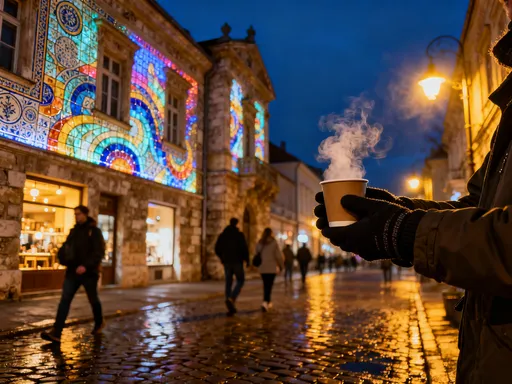
Each autumn, as the days grow shorter and the air turns crisp, Pécs transforms into a canvas of light and color during the annual Zsolnay Light Festival. Named after the world-renowned Zsolnay Porcelain Manufactory, which has been producing handcrafted ceramics in the city since 1853, this event celebrates Pécs’s industrial legacy through modern artistic expression. For three magical nights, historic buildings—including the cathedral, the old town hall, and the Zsolnay Cultural Quarter—become backdrops for dazzling light projections, animated stories, and interactive installations.
The festival’s centerpiece is the illumination of the Zsolnay Villa, a neo-Renaissance building that once served as the family residence. As darkness falls, its façade comes alive with swirling patterns inspired by traditional ceramic glazes—iridescent blues, deep greens, and golden yellows that seem to ripple like liquid. Soundscapes composed of folk melodies and ambient tones enhance the experience, creating a multisensory journey through time and craft. Nearby, smaller projections tell the stories of the artisans who shaped the factory’s legacy, their faces and hands animated in tribute.
What makes the Zsolnay Light Festival so powerful is its ability to bridge past and present. The Zsolnay company, known for its pioneering use of eosin glaze and architectural ceramics, once supplied tiles for buildings across Europe. Today, the festival honors that innovation while inviting contemporary artists to reinterpret it. Local schools participate by designing their own light patterns, and community groups host warm drink stands serving mulled wine and hot chocolate, reinforcing the sense of collective celebration.
Visitors often describe the atmosphere as dreamlike—a rare blend of grandeur and warmth. Families stroll together, children point excitedly at floating lanterns, and couples pause beneath glowing archways. Unlike more commercial light festivals, this one feels deeply rooted in place. It’s not about spectacle for spectacle’s sake, but about remembering who built the city and how beauty can be both functional and profound. By the end of the night, you don’t just see Pécs differently—you feel connected to it.
Early Music Festival: Sounds from Another Time
For lovers of history and harmony, the Early Music Festival offers an unparalleled auditory journey. Held each spring in some of Pécs’s most acoustically refined spaces—medieval chapels, Baroque churches, and candlelit crypts—this intimate gathering brings to life music composed centuries ago, performed on historically accurate instruments. From Gregorian chants to Renaissance lute sonatas and Baroque violin concertos, the program is a carefully curated exploration of Europe’s musical roots.
One of the most memorable performances takes place in the Minorite Church, a 13th-century Gothic structure with vaulted ceilings that amplify every note. On a cool evening, as candlelight flickers across stone walls, a small ensemble performs a program of 17th-century Hungarian sacred music. The viola da gamba, a precursor to the modern cello, produces a soft, haunting tone, while a theorbo—a large lute with an extended neck—adds depth and resonance. The effect is transcendent, as if the very walls are remembering songs they haven’t heard in centuries.
What sets this festival apart is its commitment to authenticity and accessibility. Performers include both renowned early music specialists from across Europe and emerging Hungarian musicians trained in period performance practice. Lectures and pre-concert talks help audiences understand the historical context, while program notes explain the significance of tuning systems, instrumentation, and notation. Even if you’ve never heard of Claudio Monteverdi or Heinrich Schütz, the music speaks for itself—emotional, intricate, and deeply human.
The festival also fosters interaction between artists and attendees. After concerts, musicians often stay to answer questions, and informal jam sessions sometimes break out in nearby cafés. This closeness—between performer and listener, past and present—creates a rare sense of intimacy. You’re not just hearing history; you’re participating in its revival. For many visitors, especially those who associate classical music with formality and distance, the Early Music Festival is a revelation: proof that the oldest melodies can feel profoundly current.
Festival of Folk Traditions: Dancing with Locals
No visit to Pécs is complete without experiencing the Festival of Folk Traditions, a joyful celebration of Hungarian rural life that takes over the city’s central square for three vibrant days each summer. Organized by local cultural associations, this event brings together dance ensembles, craft artisans, and home cooks from across the Baranya region. Colorful folk costumes—embroidered blouses, aprons with floral patterns, and men in crisp white shirts with dark vests—turn the plaza into a living tapestry of regional identity.
The heartbeat of the festival is the circle dance, or karikázó, where participants link arms and move in a rhythmic, flowing pattern to the sound of violins, accordions, and cimbaloms. Unlike staged performances, these dances are open to everyone. Local grandmothers gently guide first-time dancers, children laugh as they try to keep up, and visitors from abroad quickly find themselves pulled into the circle. There’s no pressure to be perfect—just to be present, to feel the music, and to share in the joy.
Besides dancing, the festival offers hands-on workshops in traditional crafts. In one corner, a master embroiderer demonstrates how to stitch intricate Hungarian motifs onto linen. Nearby, a potter shapes clay on a foot-powered wheel, explaining how ancient techniques are still used today. The scent of baking fills the air as volunteers prepare lángos—deep-fried flatbread topped with sour cream and cheese—and túróscsusza, a comforting noodle dish with cottage cheese and paprika.
What makes this festival so moving is the intergenerational pride on display. Teenagers perform alongside their grandparents, and parents bring toddlers to learn simple steps. These traditions are not museum pieces but living practices, passed down with love and intention. For visitors, the experience is not just educational but emotional—a reminder that culture is not something you observe from a distance, but something you do, make, and share.
Offbeat Gems: Smaller Events That Make the Difference
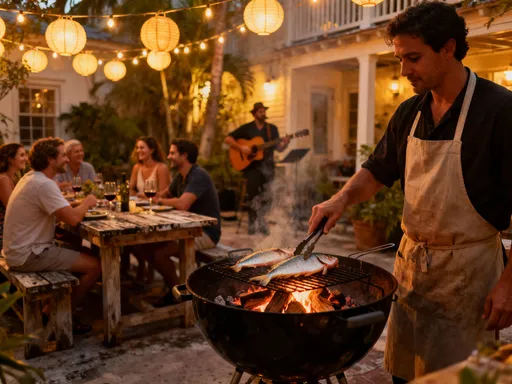
While the major festivals draw well-deserved attention, it’s the smaller, spontaneous events that often leave the deepest impression. Pécs thrives on these low-key, community-driven moments—gatherings that rarely make it into travel guides but define the city’s soul. An open-air film screening in a vineyard outside town, where locals bring blankets and homemade pastries. A poetry reading in a centuries-old wine cellar, the words echoing softly in the cool, stone chamber. A jazz trio playing in a hidden courtyard, discovered only because you followed the sound of a saxophone down a narrow alley.
These events are rarely advertised with billboards or websites. Instead, they’re shared through local networks—posters in café windows, mentions in neighborhood newsletters, or casual invitations from shopkeepers. Staying longer in Pécs—beyond a weekend—increases your chances of stumbling upon them. So does talking to residents. A simple “Mi a program ma este?” (“What’s happening tonight?”) at a bakery or market can lead to an unexpected invitation.
One such hidden gem is the “Courtyard Evenings” series, held in June and July. Private homes and historic buildings open their inner gardens to the public for music, storytelling, and wine tasting. These spaces, usually unseen by outsiders, reveal another layer of Pécs’s charm—its emphasis on privacy, beauty, and hospitality. You might find yourself sipping local red wine under a wisteria-covered pergola, listening to a folk singer recount a centuries-old ballad, surrounded by people who have lived in the neighborhood for decades.
These smaller events matter because they reflect how culture lives in Pécs—not as a product, but as a practice. They require no tickets, no stages, no crowds. They happen because people want to share something meaningful. For the thoughtful traveler, they offer the rarest of gifts: access not just to a place, but to its heartbeat.
Traveler’s Guide: Planning Your Trip Around the Festivals
To fully experience Pécs’s festival culture, timing is essential. The city’s cultural calendar peaks from spring through early autumn, with the Early Music Festival in April, the Folk Traditions Festival in July, and the Zsolnay Light Festival in October. Planning your trip around these dates ensures access to the most vibrant expressions of local life. However, even outside festival season, Pécs offers a rich cultural rhythm—weekly markets, rotating art exhibitions, and regular performances at the National Theatre.
Accommodation options range from boutique guesthouses in restored historic homes to modern hotels near the city center. Because festivals attract both domestic and international visitors, booking several months in advance is advisable, especially for weekends. Staying in the old town allows for easy walking access to events, while neighborhoods like Széchenyi Hill offer quieter stays with panoramic views.
Getting to Pécs is straightforward. Direct trains from Budapest take about three and a half hours, offering scenic views of the Hungarian countryside. Regional buses connect to nearby cities like Szeged and Kaposvár, and the city is accessible by car via the M6 motorway. Once in Pécs, public transit is reliable, but the compact center is best explored on foot or by bicycle.
To engage respectfully with local culture, a few simple gestures go a long way. Learning basic Hungarian phrases—such as “köszönöm” (thank you) and “szép napot” (have a nice day)—is appreciated. Supporting local vendors at markets and festivals helps sustain the community. Most importantly, embracing a slower pace of travel allows for deeper connections. Instead of rushing from one event to the next, linger over coffee, strike up a conversation, and let the city reveal itself in its own time.
Conclusion: Why Pécs Changes How You See Travel
Pécs doesn’t just offer festivals—it offers a different way of traveling. In an age where tourism often means crowded landmarks, rushed itineraries, and staged experiences, Pécs stands apart. Here, culture is not performed for visitors; it is lived alongside them. The music, the dances, the food, the light—it all flows from a deep sense of place and belonging. To attend a festival in Pécs is not to watch a show, but to be welcomed into a moment of shared humanity.
This city reminds us that the most meaningful travel experiences are not about collecting photos or checking destinations off a list. They are about connection—between people, across generations, and through time. They are about feeling the warmth of a hand guiding you in a circle dance, the awe of hearing a 400-year-old melody in a candlelit chapel, or the joy of tasting a recipe passed down through a family for generations.
Pécs changes how you see travel because it shifts the focus from seeing to being. It invites you to slow down, to listen, to participate. And in doing so, it offers something rare and precious: not just memories, but transformation. So if you’re ready to move beyond the surface, to discover a place where culture breathes and community thrives, consider Pécs. You may arrive as a visitor—but you’ll leave as part of the story.